Masonry
Tuckpointing & Mortar Joint Repair
Tuckpointing and mortar joint repair address deteriorated joints between masonry units while preserving suitable surrounding brick or stone.
Explore the service
Classic Masonry Springfield
Chimney repair addresses deteriorated masonry and related defects so the repair matches the part of the chimney that is actually failing. Classic Masonry Springfield evaluates repair requests for cracked mortar, damaged brick, water-related deterioration, and rebuilding needs across the Springfield area.

Chimney repair addresses deteriorated masonry and related defects so the repair matches the part of the chimney that is actually failing. Classic Masonry Springfield evaluates repair requests for cracked mortar, damaged brick, water-related deterioration, and rebuilding needs across the Springfield area.
A ceiling stain may be noticed indoors while the source is at an exposed detail above the roof. A cracked brick may be isolated or part of a larger pattern. The estimate should describe both what will be repaired and which observed concern that work is intended to address.
Repair options depend on the condition of the remaining materials and the stability of the assembly. A sound portion should not be treated as failed simply because another portion needs work, but a superficial patch should not be used to conceal widespread deterioration.
Exterior masonry repair and internal flue repair are different tasks. If the fireplace has smoke, odor, or operational problems, describe those separately. A renewed exterior cannot by itself confirm that the fireplace and venting system are ready for use.
Explain the symptoms and when you first noticed them.
Assess accessible conditions and discuss what requires closer examination.
Define the repair area, materials, and any related trade work.
Carry out the agreed repair and review completion and maintenance information.
Every project is priced from its own scope. A generic starting price cannot account for the actual condition, access, and work involved. These are the details to discuss.
A leaking chimney rarely starts inside the flue. Water usually finds its way in through a cracked crown, an open or missing cap, failed flashing where the chimney meets the roof, or mortar joints that have lost their weather seal. Chimney leak repair starts by finding which of those paths is active — often more than one — and then repairing the masonry so the water stops at the outside. If you have noticed staining on a ceiling near the fireplace, damp odors after rain, or white deposits on the brick, describe them when you request an estimate, and use our chimney leak observation checklist to gather what the assessment needs.
Not every failing chimney needs a full rebuild, and not every chimney should be patched. When damage is limited to joints, the crown, or a few spalled units, a matched repair preserves the original masonry. When the upper courses have shifted, the core has deteriorated, or previous repairs have failed repeatedly, a chimney rebuild above the roofline is the honest recommendation — new construction on the sound structure below, matched to the home. The estimate should tell you which side of that line your chimney is on, and why.
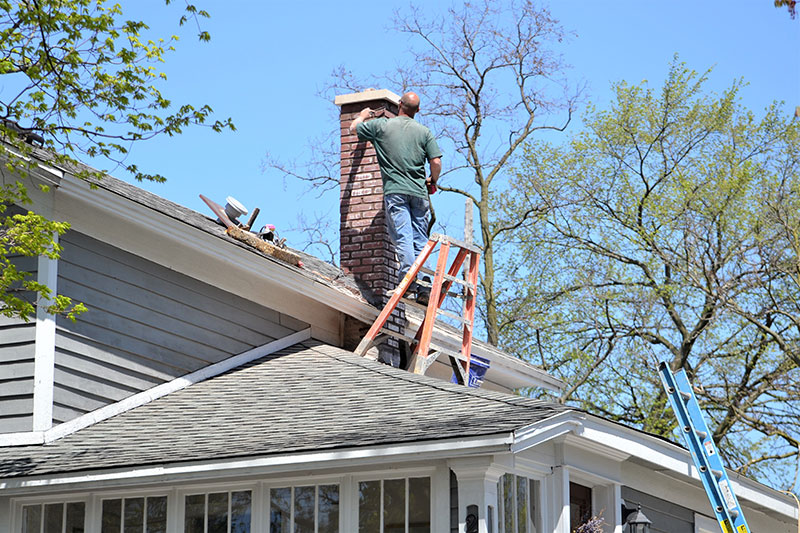
Use this visual reference to explain what you like or what needs attention. Your property's dimensions, existing materials, and construction determine the appropriate scope.
Explore the image collectionTuckpointing and mortar joint repair address deteriorated joints between masonry units while preserving suitable surrounding brick or stone.
Explore the serviceChimney crown repair addresses the protective top surface around the flue on a masonry chimney.
Explore the serviceMasonry waterproofing begins with understanding how water reaches the brick or stone and which details need repair.
Explore the serviceHave a question about your property? Give us a call. The actual condition and scope guide the answer.
(417) 859-6388 ↗No. Water can enter through several details, including roofing connections and chimney components. Locating the likely entry path matters before choosing a masonry repair or water-repellent treatment.
Rebuilding may be more appropriate when damaged or displaced materials cannot support a durable localized repair. That decision should follow the actual condition rather than the size of the most visible crack.
Matching depends on available brick, mortar texture, weathering, and joint details. Discuss the expected appearance before approving the work, especially when only part of the chimney will be rebuilt.
Stop using a system with a suspected safety problem until it has been appropriately evaluated. Falling masonry, smoke entering the home, or a suspected chimney fire should not be tested by lighting another fire.
It can address a crown defect, but other damage may remain. A useful assessment considers the surrounding masonry and related water-entry details rather than treating the crown in isolation.
A project-specific estimate is necessary. The extent of damage, height, roof access, selected materials, and any related repairs determine the scope and price.
Tell us what you are planning. We will help define the next step and the estimate your project needs.